If someone tells you they were abused as a child — would you know what to say?
1 in 4 children in Australia experience sexual abuse.
This free, practical guide helps you feel more prepared if someone ever shares their story of childhood abuse — whether that happens today or years from now.
What’s in the guide
Practical tips and information from Knowmore’s trauma-informed counsellors.
- WHAT TO SAY
The exact words to say — and what not to say. - SERVICES
Free, trusted support options to offer immediately. - FOLLOW-UP
Simple ways to stay connected after the conversation. - NEXT STEPS
What to do afterwards — for both the supporter and survivor. - FOR SURVIVORS
A message of support and resources for survivors to read and revisit.
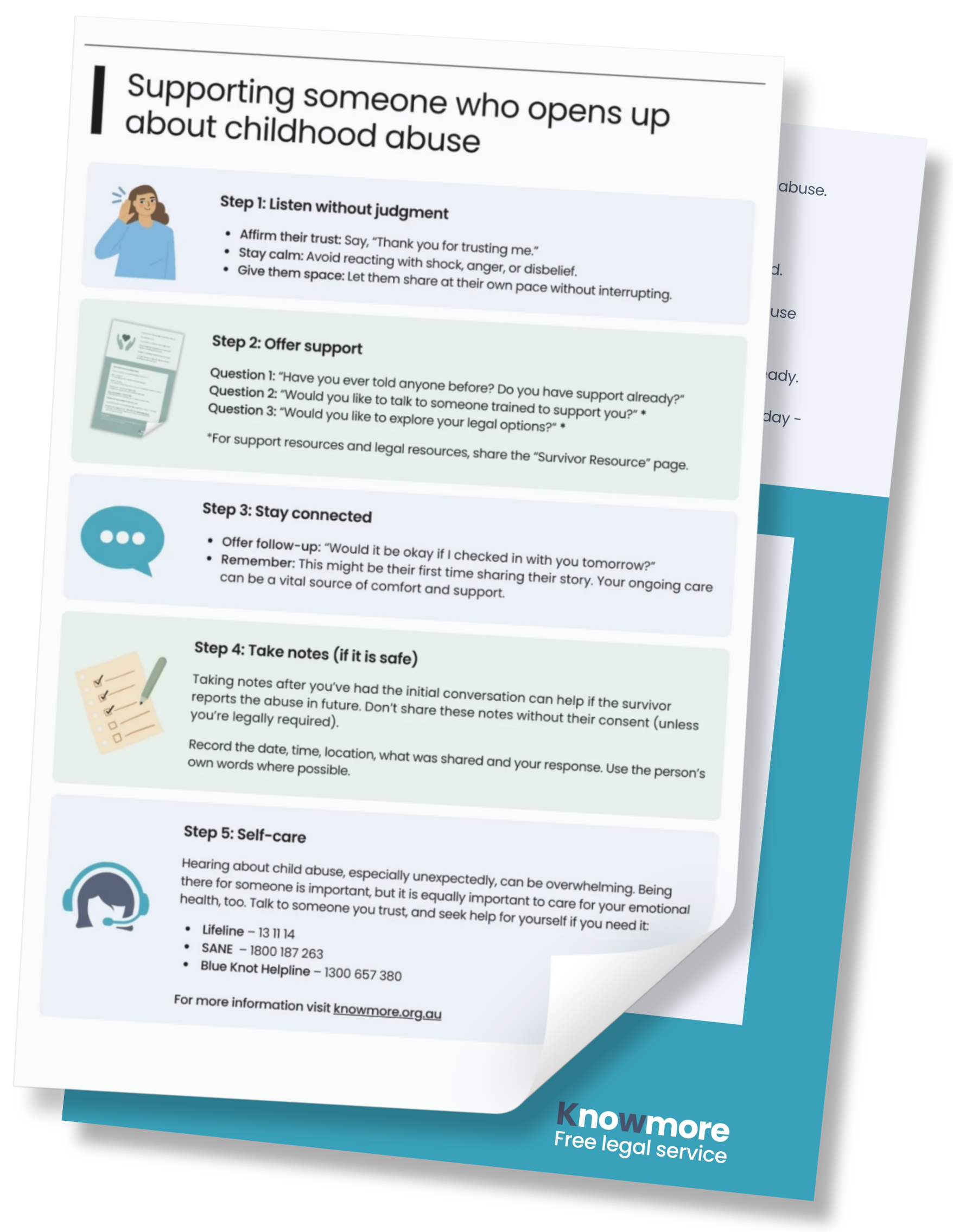
Download your guide.
Enter your details below to receive the “How to Support” guide and Survivor Resources. They’re easy to print or save onto your device for future reference.
- Includes 5 key steps to supporting someone who has opened up about child abuse.
-
Since July 2018, Knowmore has taken more than 118,000 calls from survivors of child sexual abuse.
Your response could be the first step in someone’s healing or justice journey.
Why keep this guide on hand?
It can take over 20 years for someone to open up about childhood abuse — and when they do, it’s usually to someone they trust. That someone could be you.
This guide helps you stay calm, know what to say, and connect them with the support they deserve.
Your response can play a powerful role in encouraging healing, justice, and hope.
You don’t have to be an expert — just ready to listen with kindness and courage.
Sign our petition.
Free legal support must continue to be available for all survivors of child abuse.
Please help survivors continue to access free legal support.

About Knowmore.
We provide free legal advice for survivors of child abuse, with integrated support from social workers and financial counsellors.
Knowmore Legal Service Limited | ABN 34 639 490 912 | ACN 639 490 912. Knowmore is funded by the Commonwealth Government, represented by the Attorney-General’s Department, the Department of Social Services and the National Indigenous Australians Agency.
The information on this website must not be relied upon as legal advice. Seek legal advice about your own particular circumstances.